
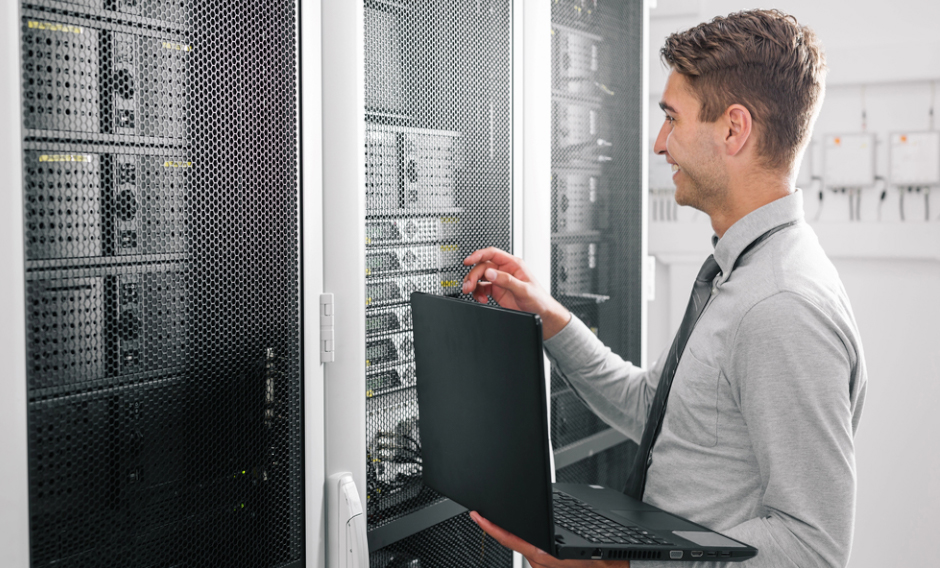
Rows of servers blinking in a cold room used to define what many people thought of as a data center. That image still comes to mind for some. However, today’s reality looks very different.
Most businesses now operate across a mix of on-premise infrastructure and cloud environments. This hybrid approach allows workloads to shift dynamically to handle changing demands for speed, flexibility, and availability. Data has become the most valuable asset for enterprises, yet legacy infrastructure struggles to keep pace.
Businesses need scalable models that adapt to changing technology without overwhelming internal teams. This change is motivating the rise of the managed data center. Organizations no longer want to manage every detail of server performance, cybersecurity, and disaster recovery.
Instead, they are turning to providers who specialize in running this critical backbone, allowing them to focus on innovation and growth. As enterprise data generation continues to expand, understanding what a managed IT company delivers is more important than ever.
Managed Data Center Services in Today’s Business Environment
A managed data center is a model where companies outsource their infrastructure management to specialized experts. These experts design, monitor, and support the environment around the clock to deliver reliability, security, and peace of mind.
Businesses that once built and refreshed their own data centers every few years are shifting to subscription-based services. This approach offers greater agility and scalability while removing the burden of heavy upfront costs.
These services include hardware provisioning, virtualization, monitoring, auditing, and ongoing administration. In cloud-managed data center services, resources are distributed across multiple environments. This creates a hybrid model that combines public cloud, private cloud, and on-premise systems.
Flexibility enables businesses to run workloads where they make the most sense, whether for compliance, cost optimization, or performance.
The managed model also eliminates the hidden costs of downtime and underutilized capacity. Providers build environments with redundancy and software-driven automation to create a strong foundation. Redundancy supports reliability by minimizing downtime and keeping systems running even during unexpected failures.
Together, these features enable companies to scale more easily while maintaining system security.
Why Businesses Turn to Managed Data Centers
Modern enterprises face constant pressure to deliver speed, agility, and reliability. Running IT operations across multiple regions adds technical complexity that can stretch internal teams to the limit.
Partnering with a managed IT company directs the burden of ongoing maintenance to specialists who are built for this role. The result is stronger performance, less stress on internal resources, and more freedom to focus on growth.
- Focus on Growth
When businesses outsource the day-to-day management of their data centers, internal IT teams no longer spend valuable time troubleshooting servers or reacting to emergencies..
Instead, they can work on customer-focused projects, digital transformation, and new initiatives that drive revenue. This allows organizations to channel talent and energy into strategic goals rather than routine maintenance.
- Reliability in a 24/7 World
Downtime carries a high cost in lost revenue and damaged trust. Managed data center providers design their environments with high availability in mind. Failover systems, load balancing, and distributed architectures create resilience so applications remain accessible even when issues arise.
Cloud-managed data center services add another layer by replicating data across multiple locations, making recovery seamless and keeping operations running.
- Strengthening Security
Cyber threats grow more sophisticated every year. Businesses cannot afford to rely on outdated defenses. Managed data center services use advanced protections like encryption, firewalls, intrusion detection, and strict access controls. They also follow industry regulations to reduce risk and make compliance easier than managing it in-house.
- Cost-Effective Scalability
The price of building or refreshing a data center can delay innovation. Managed models replace heavy capital expenses with predictable operating costs.
Businesses pay only for the resources they use and can scale up or down as demand changes. This flexibility eliminates the burden of over-provisioning and enables technology investments to grow in tandem with business needs.
Building Flexibility with a Managed IT Company
Flexibility defines the future of IT. Businesses no longer need to wait years for the next round of hardware upgrades. A managed IT company offers a modular design, allowing components to be added or removed without disrupting the entire system. This approach avoids waste while supporting growth.
Converged data center models further reduce inefficiency by integrating storage, compute, and networking into unified systems. Hybrid storage that uses flash memory delivers faster performance and reduces delays in handling data. Software-defined architectures simplify and centralize management, giving businesses more control and flexibility.
Automation provisions new services quickly without the need for additional physical servers. This combination creates a leaner, faster, and more efficient model for managing IT resources.
This flexibility is especially a must as workforces become more distributed. Employees and customers expect easy access from any geography. Hence, managed data centers help centralize applications and data so businesses can deliver consistent performance to every user regardless of location.
The Power of Cloud Managed Data Center Services
Cloud-managed data center services add a layer of adaptability that traditional environments cannot match. The cloud offers elasticity, allowing enterprises to expand resources for seasonal peaks or new market opportunities instantly. Organizations can now grow without waiting months for new hardware to deploy.
Disaster recovery strengthens resilience in the cloud as well. Businesses can create a safeguard by replicating data across multiple geographic regions. It protects their information and systems from localized disruptions. This approach keeps workloads available even in the face of unexpected events such as natural disasters, cyberattacks, or hardware failures.
Performance monitoring adds another advantage. Providers deploy tools that identify bottlenecks and resolve them before they affect end users. Cloud platforms automatically reallocate resources during spikes in demand. This way, they can protect customer experiences and avoid performance degradation.
Strategic Value for Enterprise Growth
The decision to move toward a managed data center is ultimately strategic. It positions enterprises to compete effectively in industries where speed, security, and scalability are key determinants of long-term success. Access to specialized expertise reduces the risk of missteps while supporting innovation.
Enterprises working across multiple geographies also gain centralized control through managed services. Applications, data, and user access remain consistent no matter where people are located. This supports both global expansion and the needs of a remote workforce.
Hybrid strategies also give organizations the ability to balance control with agility. Sensitive workloads can be kept in private environments where security and compliance are easier to manage. At the same time, businesses can utilize the cloud to achieve scalability and flexibility in response to unanticipated demands.
Companies that adapt early position themselves ahead of the curve with modern tools and strategies. Competitors that remain tied to legacy infrastructure may struggle with limitations that slow progress and hold them back.
Partnering for What Comes Next
The businesses that succeed in the years ahead will be the ones that treat data as a core driver of growth. A managed data center gives enterprises the speed and flexibility to scale without the heavy burden of legacy systems. It transforms IT from a cost center into a strategic enabler that drives competitive advantage.
At Metis Technology, we help organizations make this transition with confidence. Our managed IT services deliver the support to keep systems performing. We also strengthen protection through advanced network security that defends information in a connected world.
Ready to move beyond outdated infrastructure and build an IT environment that grows with your business? We would love to talk. Reach out to us and discover how our expertise can help you realize the full potential of your data. Free your team to focus on innovation today.